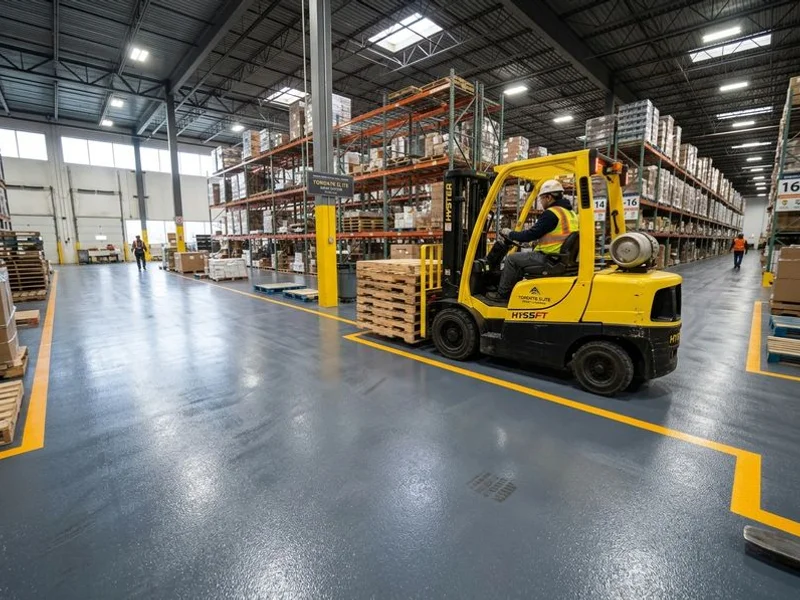
Automotive Service Bay Epoxy in Mississauga - Oil-Proof Floors for Dealerships, Repair Shops, and Fleet Garages
Toronto Elite Epoxy Flooring - Mississauga installs broadcast quartz, vinyl flake, and solid-colour epoxy for dealership service departments, independent repair shops, quick lube bays, transmission and engine rebuild shops, collision centres, and fleet maintenance garages. Every automotive floor includes hoist pad reinforcement, continuous floor-to-drain transitions, and resistance to the oils, brake fluids, and transmission fluids that ruin floor paint and thin coatings within 6-12 months.
Service bays need engineering a home garage coating can't provide. Two-post, four-post, scissor, and in-ground hoists put 6,000-12,000 lbs on their anchor pads. Floor paint at 40-60% solids lets go under that within months, while 100% solids epoxy on a CSP 3 profile handles hoist cycles for the life of the system. Oil is the other big problem. Motor oil, ATF, gear oil, and brake fluid soak 10-15 mm into concrete over the years, and any coating applied on top will peel within 3-6 months regardless of quality. Proper decontamination with alkaline degreaser and hot-water extraction, checked by grind-dust colour before grinding, is the most important step in an automotive floor.
A two-bay shop of 1,200-1,600 sq ft takes 1-2 days. Dealership service departments of 8,000-20,000 sq ft are done in overnight phases. Pricing runs $6 to $12 per sq ft depending on the system, number of hoist pads, and how deep the oil goes. We work with dealerships along Dixie Road and the 403 and QEW corridors, independent shops in Malton and Cooksville, and fleet garages near the airport.
Automotive Service Bay Epoxy Flooring in Mississauga
Toronto Elite Epoxy Flooring - Mississauga installs broadcast quartz and solid-colour 100% solids epoxy for dealerships, independent repair shops, quick lube centres, collision shops, and fleet garages across the city. Our service bay systems include oil decontamination, hoist pad reinforcement, and anti-slip aggregate designed for vehicle service, where ordinary floor paint fails in under a year.
What Is Automotive Service Bay Epoxy?
Automotive service bay epoxy is a 100% solids floor system engineered for oil contamination, hoist loads, and slip hazards in vehicle repair and maintenance. Unlike home garage coatings, it includes petroleum decontamination, hoist pad reinforcement, and anti-slip aggregate that meets ASTM D2047 wet slip resistance for commercial service.
What Does an Automotive Bay Epoxy System Include?
- Petroleum decontamination and hot-water extraction, verified by grind test
- CSP 3 diamond-ground surface preparation
- 100% solids epoxy base coat
- Hoist pad reinforcement rated for 6,000-12,000 lb point loads
- Anti-slip quartz aggregate broadcast (ASTM D2047 compliant)
- Hot-tire resistant, UV-stable polyaspartic topcoat
- Continuous floor-to-drain detailing
How Much Does Automotive Service Bay Epoxy Cost?
Service bay epoxy runs $6-$12 per sq ft installed, depending on the system, number of hoist pads, and depth of oil decontamination. A standard two-bay shop typically runs $8,000-$15,000 installed.
Key Benefits of Epoxy Flooring for Automotive Facilities
Our epoxy systems are built to handle heavy mechanical use, oil exposure, and constant cleaning in automotive shops. They focus on strength, chemical resistance, and easy maintenance while giving the shop a professional look.
Superior Chemical and Fluid Resistance
Service bays are constantly exposed to motor oil, fuel, antifreeze, DOT 3 and DOT 4 brake fluid, ATF, gear oil, and degreasers. Commercial epoxy forms an impermeable barrier against all of them, preventing the corrosion and staining that damage bare concrete.
Before installation, we decontaminate oil-saturated concrete. That step makes sure the coating bonds properly after CSP 3 grinding. Many installers skip it, and we’ve found it’s the single most important step for long-term performance on automotive slabs.
The 100% solids epoxy we apply resists automotive fluids far better than thinner 40-60% solids alternatives. Paired with a hot-tire resistant polyaspartic topcoat, the surface handles chemical contact without yellowing or softening. Dealership service departments and busy independent shops, where spills are constant rather than occasional, are our most common automotive clients.
Outstanding Load and Impact Durability
Lifts, tool carts, and constant tire traffic put service floors through intense load cycles. Hoists put 6,000-12,000 lbs on their anchor pads, which is why every hoist pad zone gets 100% solids epoxy. Coatings at 40-60% solids fail there within months.
Our epoxy bonds tightly to properly prepared concrete and spreads weight evenly. In showrooms and drive lanes, a polyaspartic topcoat protects against tire scuffs and heat marks. In heavy-duty fleet garages running diesel trucks, like many of the logistics fleets based near the airport, we use thicker builds in the highest-load zones.
Improved Safety and Anti-Slip Options
Technicians need traction even when the floor is oily. We add quartz, aluminium oxide, or polymer grit to the epoxy to increase friction and meet ASTM D2047 wet coefficient requirements. That cuts slips and falls while keeping the floor easy to clean.
Gloss and texture are balanced to each zone. High gloss improves light and visibility but needs anti-slip additives in wet areas. We match the texture in each bay to its job, with detailing zones, wash drains, and hoist areas each getting the traction they need.
A seamless epoxy surface also removes the cracks where debris collects and trip hazards form, keeping the workspace safe and smooth.
Continuous, Hygienic, and Easy-to-Clean Surfaces
Epoxy seals the concrete completely, creating a non-porous surface that keeps moisture out. Oil, fuel, and metal shavings come up with a mop or pressure washer, with no grout lines or joints to trap debris.
| Feature | Benefit |
|---|---|
| 100% solid epoxy | Superior chemical and hoist load resistance |
| Polyaspartic topcoat | UV stability and hot-tire pickup protection |
| Continuous finish | Hygienic, easy-to-clean surface |
| Anti-slip aggregate | ASTM D2047 wet traction for petroleum environments |
| Petroleum decontamination | Long-term adhesion over oil-saturated concrete |
Bay-by-bay overnight scheduling means the shop never has to close. The reflective finish also brightens work areas, improving visibility without extra lighting.
Epoxy Flooring Systems and Options for Service Bays
We tailor each system to the heavy mechanical demands and cleanliness standards of automotive service. Each option has its own strengths in durability, install time, and appearance.
Quartz-Filled and Self-Leveling Epoxy Systems
Quartz-filled and self-levelling epoxy combine strength, slip resistance, and a seamless finish for wet or oily bays. Self-levelling epoxy forms a uniform, high-build coating that resists abrasion from rolling toolboxes and vehicles. Quartz aggregate reinforces it, adding traction and a consistent look across the bay.
Before application, oil decontamination removes saturation from the concrete, the most frequent cause of adhesion failure on automotive floors. Proper CSP 3 prep lets the epoxy bond completely. At hoist pads, 100% solids epoxy supports the concentrated loads that delaminate 40-60% solids coatings.
Metallic Epoxy and Decorative Flake Finishes
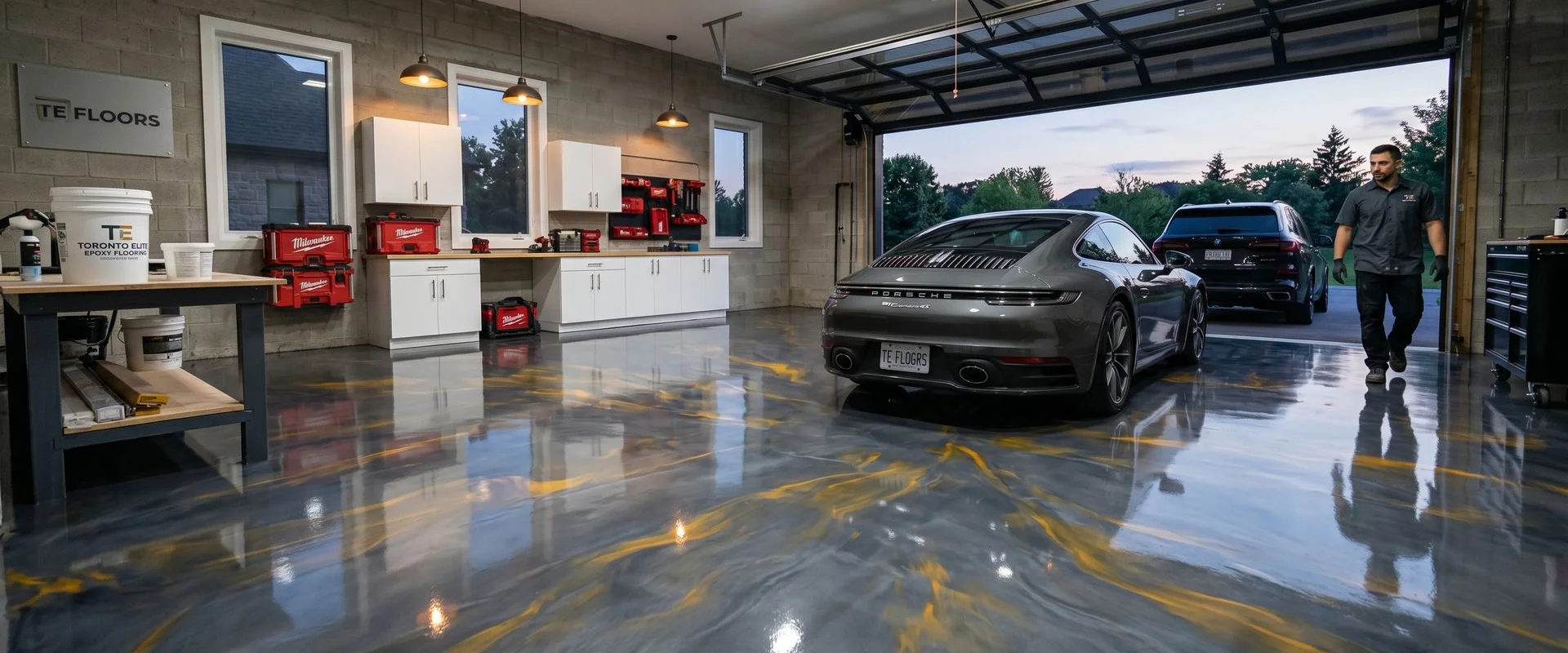
Metallic and decorative flake floors pair durability with a polished look that suits dealership showrooms and customer-facing service drives. Reflective pigments or coloured vinyl flakes add depth and contrast while keeping the surface non-slip.
Each project starts by matching the resin to chemical exposure and workflow zones. Decorative flake is broadcast into a base coat and sealed under a clear polyaspartic layer for maximum wear protection. Metallic epoxy creates unique patterns that help service reception areas stand out. Dealerships with heavy customer traffic through the service drive, like the franchise stores along Dixie Road and the QEW, often choose decorative flake for that reason.
Polyaspartic Coatings for Fast Turnaround
When speed matters, polyaspartic allows same-day or next-morning return to service. We apply it over epoxy primers for chemical and abrasion resistance with a short cure. A polyaspartic topcoat resists hot-tire pickup, preventing the tire-mark transfer that damages standard urethane finishes in busy bays.
It handles Canadian garage temperature swings well, holding colour and gloss over time. Low odour and minimal downtime make it ideal for overnight bay turnovers. A recoat every 5-7 years restores traction and clarity without removing the system.
Custom Features: Colours, Patterns, and Line Marking
We use colour and layout to support branding, visibility, and workflow. Service bays often get colour-coded safety zones, vehicle outlines, and equipment staging areas. Metallic pigments, quartz blends, or logo inlays add a professional look without sacrificing performance.
Options include matte or gloss topcoats, high-reflectivity finishes for brighter shops, and non-yellowing sealers. We also mark EV service zones, restricted areas, and fire lanes with chemically resistant urethane or polyaspartic line coatings.
Professional Surface Preparation and Installation Process
Every floor follows a systematic process that protects adhesion and long-term reliability, focused on an even surface, sound concrete, and the chemical tolerance busy service bays need.
Mechanical Diamond Grinding and Surface Profiling
We start with full diamond grinding to remove contaminants, old coatings, and weak laitance, using industrial HEPA vacuums to keep dust down. A CSP 3 profile gives the epoxy the texture it needs to anchor mechanically.
On oil-saturated concrete, decontamination comes before grinding so hidden hydrocarbons don’t interfere with adhesion. We adjust the grit progression to slab porosity and wear zones to keep depth even without removing more concrete than needed. The grind-dust colour check after decontamination is our verification. Orange-tinted dust means oil is still there and needs another treatment before any primer.
Crack Repairs and Moisture Testing
Visible and hidden cracks are repaired with flexible epoxy mortar and structural fillers that bridge minor movement and stay seamless under the coating. Then we test moisture with ASTM F1869 calcium chloride tests or in-slab probes. Vapour transmission must be below 3 lbs per 1,000 sq ft per 24 hours before coating.
If moisture is too high, a mitigation primer goes down to prevent future blistering. This quality check keeps structural flaws from undermining performance in busy service areas, and all readings are documented in the project record.
Application Techniques for Long-Lasting Results
We install 100% solids epoxy at every hoist pad zone, where weaker formulations fail under concentrated vehicle weight. The rest of the floor gets high-build base coats and a hot-tire resistant polyaspartic topcoat.
We backroll and cross-hatch every coat for an even finish. Each coat cures overnight in the bay-by-bay schedule, so the shop stays open. Quartz or flake is broadcast at full coverage, and every layer is checked for consistent thickness before the next one goes on.
Durability, Longevity, and Maintenance Expectations
Service bay floors have to handle oil, mechanical stress, and constant vehicle traffic. Our automotive systems are engineered for reliable adhesion, abrasion resistance, and easy cleaning under those conditions.
Lifespan of Commercial Automotive Epoxy Floors
A well-installed 100% solids automotive system averages a 10-15 year service life in a typical dealership or repair shop, depending on loads, chemicals, and maintenance. Decontaminating the slab before CSP 3 grinding is what separates floors that last from floors that peel in 6-18 months.
In hoist zones, 100% solids epoxy provides compressive strength that thinner coatings can’t match. Lift anchors take repeated point loads with every cycle, so the right spec there isn’t optional. Combined with proper moisture control, that keeps bond strength steady through freeze-thaw swings and heavy winter use, when cars roll in carrying slush from the 401 and 403.
Routine Cleaning and Re-Coating Practices
Maintenance has a direct effect on lifespan. Standard practice is daily dust mopping, weekly detergent scrubbing, and monthly degreasing to remove oil films that dull the gloss. We recommend neutral pH cleaners over harsh solvents that soften epoxy over time.
To renew the coating, a light abrasive screening every 5-7 years restores traction and clarity, and a fresh polyaspartic topcoat at that point restores hot-tire resistance. Bay-by-bay overnight scheduling allows recoating without interrupting service. Each section cures in 12-16 hours so lifts and equipment are back in use the next morning.
Comparing Epoxy vs. Alternative Floor Coatings
Epoxy is the first choice for vehicle service because of its adhesion, chemical resistance, and load capacity. Urethane cement is sometimes specified for extreme chemical or thermal conditions, but it costs more and takes longer to cure. Acrylic sealers offer minimal protection and aren’t rated for petroleum or hoist loads.
Hybrid systems with an epoxy base and polyaspartic topcoat balance durability and appearance while keeping the fast turnaround active shops need. It’s the standard configuration we use in most dealership service departments. The base handles adhesion and loads, and the polyaspartic handles daily chemical and heat exposure.
Related Questions Shop Owners Ask
Why does epoxy fail so quickly on some automotive shop floors?
It’s almost always one of two causes: oil-contaminated concrete that wasn’t decontaminated before grinding, or 40-60% solids coatings used where 100% solids epoxy was needed at the hoists. Oil soaks 10-15 mm into concrete over years of spills. A coating over that bonds to the oil residue, not the concrete, and comes off within 3-6 months regardless of product quality. The grind-dust colour check after decontamination is the step most failed installations skipped.
Can a quick lube or oil change bay get a different spec than a full service bay?
Yes. Quick lube bays see frequent oil spills but usually no hoist loads, so the priorities are petroleum resistance and slip control. A broadcast quartz system with full anti-slip aggregate and continuous drain transitions is the right spec. Full service bays add hoist pad reinforcement. Transmission rebuild and heavy mechanical bays may need thicker builds for impact from dropped tools and heavy equipment. We assess each bay’s actual use before specifying.
How do independent shops schedule floor installations without losing revenue?
Most independent shops with 2-6 bays finish the floor in 2-4 overnight phases from Monday to Thursday. You run your normal schedule during the day, and our crew arrives after closing. Each bay is clear for vehicles the next morning. Larger dealership service departments with 10-20 bays are phased over 2-3 weeks of overnight work. The main scheduling question is whether two-post hoists can be lowered temporarily. If they can, we work around fixed equipment without removing any lifts.
What happens if a hot tire transfers rubber to the floor in the first few weeks?
Hot-tire pickup in the first 30 days means either the topcoat wasn’t rated for hot tires or vehicles came back before it fully cured. Our polyaspartic topcoat is rated for hot-tire contact and UV. If a car goes back into a bay too early, Toronto Elite Epoxy Flooring - Mississauga will identify the affected area and topcoat it as part of the project. After full cure, usually 5-7 days, hot-tire resistance is exactly what the polyaspartic is built for.
Do EV service bays need a different epoxy specification than ICE vehicle bays?
EV bays can use the same 100% solids epoxy and polyaspartic system as conventional service bays. The difference is in battery service areas. If you service high-voltage battery packs with static-sensitive components, consider an ESD-dissipative topcoat there. Most EV work at dealerships, like tires, suspension, and brakes, uses standard automotive epoxy. Battery service areas get the same ESD assessment we apply to electronics and pharmaceutical facilities.
Auto Service Bay Epoxy Pricing
Oil decontamination depth and hoist lift pad count affect final price.
Why GTA Customers Choose Toronto Elite Epoxy Flooring - Mississauga for Auto Service Bay Epoxy
Petroleum Decontamination Included
Oil soaks 10-15 mm into concrete. Our crew applies alkaline degreaser and hot-water extraction, then checks grind-dust colour before any primer. Skip this and contaminated slabs peel in 3-6 months.
100% Solids at Every Hoist Pad Zone
Hoists put 6,000-12,000 lbs on their anchor pads. We specify 100% solids epoxy in those zones, because 40-60% solids systems fail there within months.
Hot-Tire Resistant Polyaspartic Topcoat
Hot tires pull standard coatings off the floor. Our UV-stable polyaspartic topcoat resists heat and tire pickup, preventing the scuffs and marks that wreck service floors within six months.
Bay-by-Bay Overnight - Shop Stays Open
We work bay by bay overnight while your service department runs during the day. Each bay is ready for vehicles the next morning.
How Auto Service Bay Epoxy Works
Oil Contamination Assessment
We inspect every slab for petroleum saturation depth using a grind-dust colour test and confirm decontamination requirement before any surface prep or primer application begins.
Petroleum Decontamination & CSP 3
Alkaline degreaser treatment and hot-water pressure extraction, then CSP 3 diamond grinding. Grind-dust colour is checked again to confirm oil penetration is cleared before any primer is applied.
Bay-by-Bay System Application
100% solid epoxy base coat, hoist pad reinforcement at lift anchor zones, anti-slip quartz aggregate broadcast, and UV-stable polyaspartic topcoat applied in overnight bay-by-bay sequence.
Slip Test & Drain Detailing
Anti-slip aggregate broadcast confirmed by ASTM D2047 wet slip coefficient, continuous floor-to-drain transitions, and safety zone line marking before vehicle return.
Ready for a Free On-Site Assessment?
Same-day quotes across the GTA. WSIB-certified, $2M liability on every project.
What Customers Say About Our Auto Service Bay Epoxy
"We run a 12-bay dealership service department off Dixie Road and kept getting peeling around the hoist pads every two years. They did the oil decontamination properly. I watched them check the grind dust before they'd prime. A full year of lift cycles later, it's perfect, and overnight scheduling meant zero lost appointments."
"Four-bay repair shop in Cooksville. The old floor was stained and peeling at the drain. They decontaminated before grinding, which nobody had ever done for us, and the quartz finish gives my techs real grip when the floor's oily. Eight months and not one tire mark."
"Fleet maintenance garage in Malton with trucks and forklifts on the floor every day. They reinforced the hoist zones and used 100% solids throughout. Installed over four overnight phases and we never had to stop."
Auto Service Bay Epoxy FAQs
How much does service bay epoxy cost in Mississauga?
$6-$12 per sq ft installed, depending on the system, number of hoist pads, and how deep the oil contamination goes. A typical two-bay shop of 1,200-1,600 sq ft runs $8,000-$15,000 and takes 1-2 days. Dealership service departments are phased overnight and confirmed in a fixed-price contract.
Our shop floor has 20 years of oil in it. Can it still be coated?
Yes, if it's decontaminated first. We apply alkaline degreaser and hot-water extraction, then check the grind dust colour. Orange-tinted dust means oil is still in the concrete and needs another treatment. Only when it's clean do we prime and coat.
Do you have to remove our hoists?
Usually not. Two-post hoists can be lowered and we coat around the anchor pads. Four-post drive-on lifts can be moved to finish each section. In-ground lifts are worked around section by section.
Will the floor resist brake fluid and transmission fluid?
Yes. A 100% solids system with a polyaspartic topcoat resists motor oil, ATF, gear oil, DOT 3 and DOT 4 brake fluid, power steering fluid, coolant, and diesel at normal shop contact times. Brake fluid spills should still be wiped up rather than left to pool.
Can you work overnight so we don't lose appointments?
Yes. Most 2-6 bay shops are done in 2-4 overnight phases from Monday to Thursday. Each bay is ready for vehicles the next morning.
Epoxy flooring, metallic coatings & polyaspartic
across the Greater Toronto Area
Same crew, same materials, same written warranty on every job. Browse by service and city — or call us direct.
Don't see your city? View our full service area →
Related Services
Industrial Epoxy Flooring in Mississauga, Ontario
Industrial epoxy flooring in Mississauga for manufacturing plants, warehouses, food processors, chemical storage, and automotive operations. 80-100 mil broadcast systems rated for Class 1-3 forklifts, 12,000+ lb point loads, and chemical spills. From $3 per sq ft for open warehouse epoxy to $18 for novolac chemical-resistant systems. WSIB cleared, $2M liability.
Wash Bay & Washdown Epoxy Flooring in Mississauga, Ontario
Wash bay epoxy flooring in Mississauga using washdown-rated polyurea and urethane cement for truck wash bays, fleet maintenance, food plant washdown, and industrial cleaning stations. Resists hot water, pressure washing, alkaline degreasers, and petroleum. $7-$12 per sq ft installed. WSIB cleared with $2M liability.
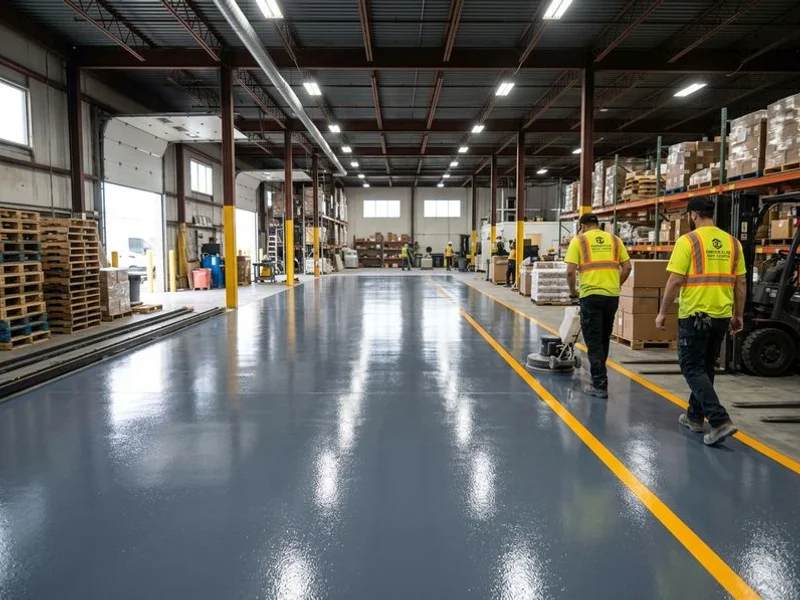
Commercial Epoxy Flooring in Mississauga, Ontario
Commercial epoxy flooring in Mississauga for retail, restaurants, offices, healthcare, labs, and institutional buildings. CFIA-compliant kitchen systems, coved medical floors, ESD flooring, and high-traffic retail epoxy. From $3 per sq ft for warehouse epoxy to $20 for pharmaceutical cleanrooms. WSIB cleared, $2M liability, compliance documentation on every project.
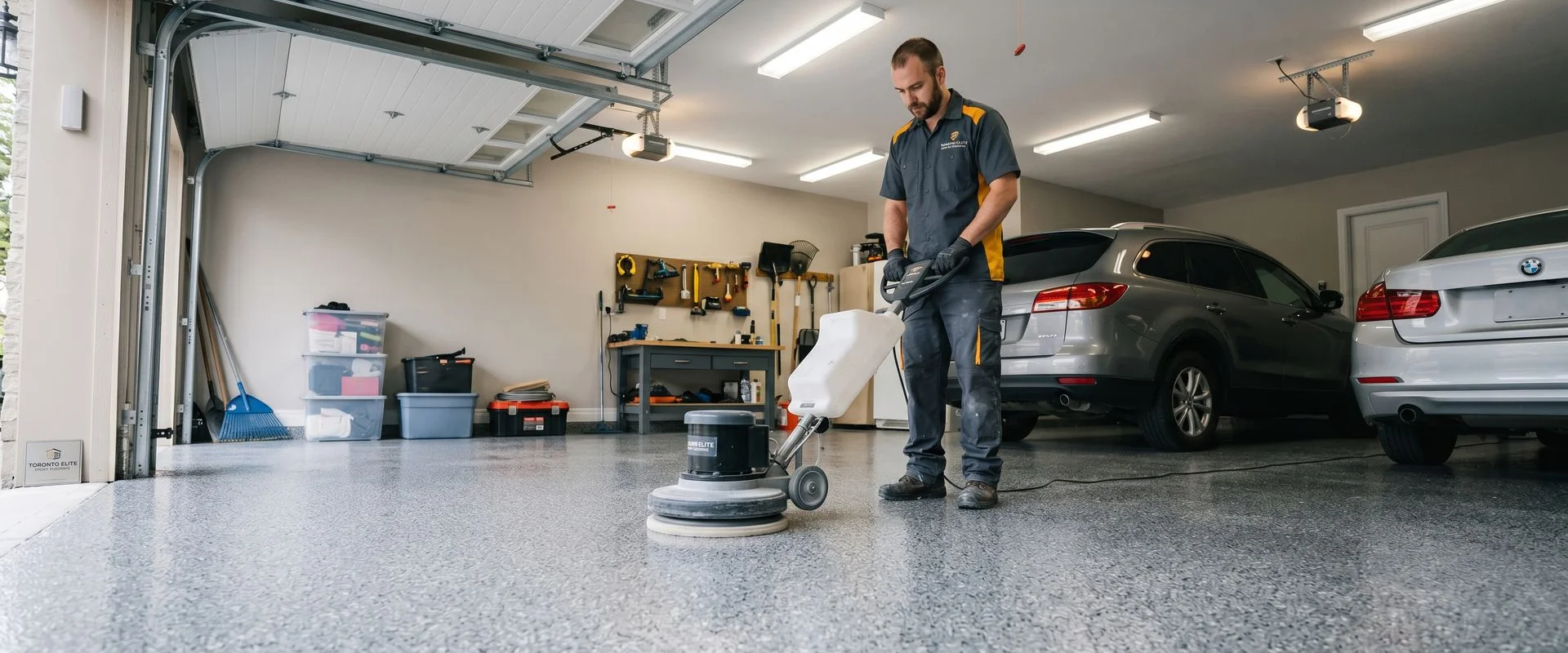
Garage Floor Epoxy in Mississauga, ON
Garage floor epoxy in Mississauga, built for highway brine and freeze-thaw. Diamond-ground to CSP 3, moisture-tested, then a 100% solids epoxy base, quartz or flake broadcast, and a UV-stable polyaspartic topcoat that resists road salt and hot tire pickup. A typical two-car garage runs $2,900-$4,500 installed in 1-2 days.
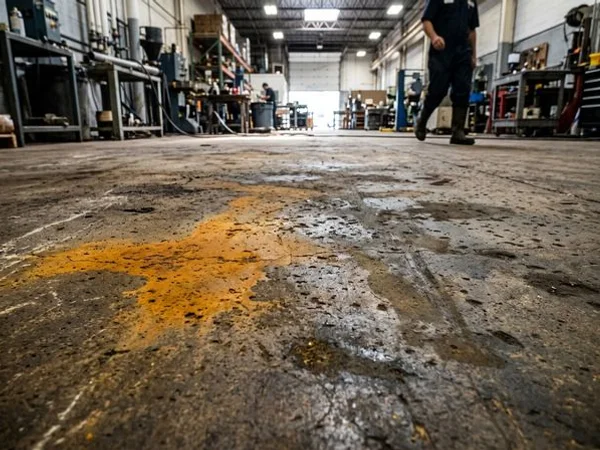
Secondary Containment Coatings in Mississauga, Ontario
Secondary containment coatings in Mississauga for fuel tank berms, chemical storage, transformer pads, and spill containment floors. Novolac and vinyl ester systems rated for full chemical and petroleum immersion, built to TSSA requirements. $10-$18 per sq ft installed. WSIB cleared, $2M liability, full compliance documentation.
Ready to Book Auto Service Bay Epoxy?
Same-day free on-site assessment. WSIB-certified, $2M liability on every project.