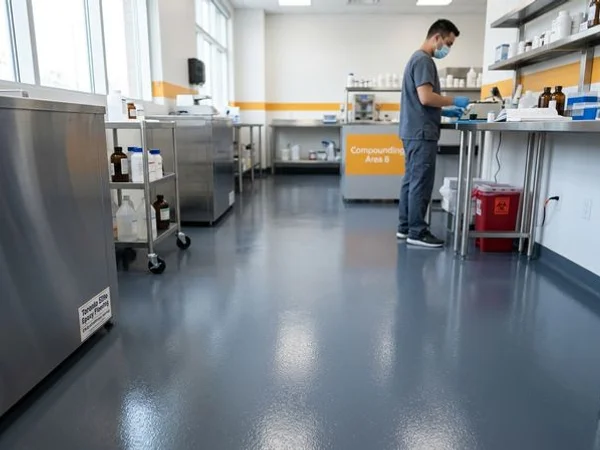
Laboratory Epoxy Flooring in Mississauga - Novolac, Anti-Static Floors for Research, QC, and Testing Labs
Toronto Elite Epoxy Flooring - Mississauga installs novolac chemical-resistant epoxy, integral sanitary coving, and anti-static coatings for research labs, academic science buildings, clinical testing labs, pharmaceutical QC labs, and industrial materials testing. Every lab floor gets CSP 3 surface prep, ASTM F2170 moisture verification, and a chemical resistance check matched to the facility's reagents and solvents.
Lab floors face chemicals that standard bisphenol-A epoxy can't handle. Novolac epoxy is made by phenol-formaldehyde condensation, which gives it higher cross-link density and much better resistance to concentrated sulphuric and hydrochloric acid, sodium hydroxide, acetone, methanol, ethanol, and halogenated solvents. Standard 40-60% solids epoxy starts softening and blistering under repeated solvent spills within 12-24 months, while novolac holds up for 8-15 years. Labs handling flammable solvents with auto-ignition risk below 100°C also need anti-static topcoats to meet NFPA 45 and Ontario Fire Code Section 5.12.
Mississauga's life sciences, pharmaceutical, and cleantech sectors keep adding lab space, from QC labs in pharmaceutical plants to pilot manufacturing and university research facilities. Lab projects typically run 500-3,000 sq ft and are done in phased overnight or weekend shifts. Pricing runs $10 to $18 per sq ft depending on chemical resistance, anti-static requirements, and coving.
Laboratory Epoxy Flooring in Mississauga
Toronto Elite Epoxy Flooring - Mississauga installs novolac chemical-resistant floors for research labs, academic science facilities, clinical testing labs, and pharmaceutical QC labs across the city. Our seamless novolac base coats and anti-static topcoats resist the concentrated acids, bases, and solvents that break down standard epoxy in 12-24 months, and phased scheduling keeps labs running during installation.
What Is Laboratory Epoxy Flooring?
Laboratory epoxy flooring is a seamless, chemically resistant floor system engineered for the acid, solvent, and reagent exposure found in research, clinical, and industrial testing labs. Novolac epoxy, with higher cross-link density than standard bisphenol-A, is the industry standard wherever floor integrity under chemical spills is a safety and regulatory requirement.
What Does a Laboratory Epoxy System Include?
- CSP 3 diamond-ground surface preparation
- Novolac epoxy base coat validated against your reagent profile
- Anti-static topcoat for flammable solvent areas (NFPA 45 compliant)
- Integral 4-6 inch sanitary coving
- Continuous floor-to-drain transitions
- Chemical resistance documentation and installation records
How Much Does Laboratory Epoxy Flooring Cost?
Laboratory epoxy flooring runs $10-$18 per sq ft installed, depending on chemical resistance, anti-static requirements, and coving. Most projects run 500-3,000 sq ft.
Specialized Epoxy Solutions for Laboratory Environments
We engineer and install high-performance floors for labs that need chemical resistance, hygiene, and safety. Every project gets CSP 3 diamond grinding and ASTM F2170 moisture testing, and our novolac systems have a proven 8-15 year life under aggressive solvent exposure.
Research Laboratories and QC Facilities
Research and QC labs combine heavy solvent exposure with constant foot traffic. They routinely handle concentrated sulphuric and hydrochloric acid and solvents like acetone, methanol, and IPA. Standard epoxy degrades within 12-24 months under those conditions, while our novolac phenol-formaldehyde formulations hold up for more than a decade.
Every installation complies with NFPA 45 and Ontario Fire Code Section 5.12 for flammable solvent use. We apply anti-static, ESD-dissipative topcoats to control static in areas handling solvents with auto-ignition risk below 100°C, where a discharge could ignite vapour.
We add 4-6 inch integral coving and continuous drain transitions for a hygienic, containment-quality space. Overnight phasing keeps lab work and testing stable during the upgrade. Academic research labs, including the university facilities along Mississauga Road, often schedule this work during term breaks, and we can fit those windows.
Clinical and Science Facility Requirements
For academic science buildings and clinical testing labs, we focus on safety, chemical cleanliness, and low maintenance. Our resin floors stay impermeable and resist staining and microbial growth.
ASTM F2170 in-slab testing confirms conditions before installation, preventing future delamination or blistering. Novolac’s higher cross-link density also reduces long-term maintenance costs compared with bisphenol-A.
Every project is WSIB-cleared with $2M liability coverage, and phased overnight scheduling means no extended closures or relocations during installation.
Industrial Materials Testing Applications
Industrial test labs push floors hard with impact and chemicals. Our systems resist abrasion, dropped tools, and toluene, xylene, and halogenated solvents, and we check tensile bond strength after prep to confirm adhesion.
These floors include integral coving, sloped drain transitions, and anti-static top layers that protect instruments from static discharge. Following NFPA 45 and the Ontario Fire Code closely keeps facilities safe, compliant, and running. That matters for testing labs in the Southdown and Clarkson industrial areas and the city’s growing cleantech pilot facilities, where chemical exposure is often harsher than in a typical commercial lab.
Advanced Chemical and Solvent Resistance Technologies
Our systems are built for labs where acids, solvents, and static hazards are part of daily work, using novolac chemistry, dense cross-linking, and anti-static controls for long-lasting protection.
Novolac Epoxy Phenol-Formaldehyde Systems
Novolac epoxy uses phenol-formaldehyde condensation polymers with a tighter molecular network than bisphenol-A. Higher cross-link density improves resistance to chemical diffusion and softening. Under repeated solvent exposure, standard epoxies often degrade within 12-24 months, while novolac typically holds up for 8-15 years in lab use.
We verify CSP 3 grinding for adhesion and test every slab with ASTM F2170 to prevent vapour problems from below. That lets the resin cure fully into a stable bond that tolerates temperature cycling. Every job carries WSIB clearance and $2M liability coverage.
| Epoxy Type | Chemical Network | Typical Service Life | Solvent Resistance |
|---|---|---|---|
| Standard Bisphenol-A | Linear crosslinking | 1-2 years | Moderate |
| Novolac Phenol-Formaldehyde | Multi-ring dense matrix | 8-15 years | Excellent |
Acid and Solvent Resistance Capabilities
Our floors resist the full range of common lab chemicals. Novolac handles concentrated sulphuric and hydrochloric acid and keeps its hardness and gloss after long contact with acetone, methanol, ethanol, and IPA.
In university and pharmaceutical labs, mixed spills with toluene, xylene, and halogenated hydrocarbons are common. Novolac’s low permeability slows diffusion and keeps the barrier intact. Every system includes 4-6 inch integral coving, a continuous transition from floor to wall or drain that stops chemicals seeping in and makes decontamination easier during audits or spills.
Anti-Static Topcoat Thermal Safety
In labs handling flammable solvents, we install ESD-dissipative topcoats with controlled surface resistivity. They limit static buildup and prevent discharges that could ignite vapour, in line with NFPA 45 and Ontario Fire Code Section 5.12, giving a safety margin for solvents with auto-ignition risk below 100°C in storage and dispensing areas.
The anti-static film bonds over the novolac base without reducing chemical performance and stays stable under constant foot and cart traffic. Combined with phased overnight installation, labs keep their thermal safety and solvent resistance while staying open.
Installation Process and Regulatory Compliance
Every system follows strict installation and verification steps to meet lab-grade performance, fire safety, and hygiene standards, from profiling to final cure, while keeping your facility running.
CSP 3 Diamond Grinding and Floor Prep
Every lab floor starts with CSP 3 diamond grinding, verified for consistency before any resin goes down. It exposes clean concrete, removes laitance, and gives novolac the best possible bond. Many contractors stop at CSP 2. Our tighter spec prevents delamination in busy lab areas under chemical and thermal cycling.
Vacuum-assisted grinders protect air quality in occupied buildings, and replica tape readings confirm the texture. Before priming, technicians check for cracks and vapour points and fill any voids with epoxy mortar for even absorption.
Each site gets documentation of the CSP verification along with our WSIB clearance and $2M liability coverage, all part of the compliance package for building management and safety officers.
ASTM F2170 Moisture Testing Standards
Every project gets ASTM F2170 in-situ relative humidity testing, read 48 hours after drilling so the slab can equilibrate. It finds internal moisture that could weaken adhesion or cause osmotic blistering under the cured coating.
Readings must be below 75% RH or within the manufacturer’s limit for novolac. If they’re higher, we use vapour mitigation primers or extend drying time before coating.
Technicians log every reading with probe depth, temperature, and ambient humidity, and the results go into your permanent project record. That’s especially important for pharmaceutical QC labs, where GMP documentation requires full material and process traceability.
Integral Sanitary Coving and Continuous Transitions
We install 4-6 inch integral coving at every wall base to prevent fluid buildup and microbial growth and to satisfy pharmaceutical and clinical lab inspections.
The cove is hand-troweled from the same epoxy mortar as the floor into a continuous curve, so floor and cove become one monolithic surface with no seam.
| Feature | Purpose | Typical Height | Compliance Reference |
|---|---|---|---|
| Integral Coved Base | Prevents fluid retention | 4-6 in. | Lab hygiene audits |
| Continuous Floor-to-Drain Transition | Eliminates grout joints | Continuous slope | NFPA 45 / Ontario Fire Code 5.12 |
We check each transition for drainage flow and surface continuity, so the floor can be washed down without risking delamination at the joint.
Phased Overnight Installation for Occupied Facilities
Research and clinical labs often run around the clock. Our phased overnight schedules avoid downtime while keeping access for essential daytime work.
The crew isolates one zone per night with portable containment walls and negative-air filtration, then grinds, tests moisture, and applies novolac within the overnight window.
By morning, each section is walkable and normal work continues. A pre-set phase plan covers cure windows, odour control, and temperature stabilization, supporting NFPA 45 and Ontario Fire Code requirements while keeping disruption to testing and production to a minimum.
Service Life, Durability, and Maintenance Considerations
Each system is specified for your lab’s use intensity, solvent exposure, and maintenance capacity, balancing chemical resistance, static control, and cleanability.
Comparing Epoxy System Lifespans
Lab floor performance differs sharply between standard and novolac epoxy. Standard high-build epoxy typically shows degradation within 12-24 months under frequent solvent cleaning or splashes. Novolac, based on phenol-formaldehyde chemistry, delivers 8-15 years when properly applied and maintained.
The chemistry explains the gap. Bisphenol-A epoxies suit light-duty zones but have lower cross-link density and weaker solvent resistance. For busy research facilities, novolac is the correct spec for long-term stability against sulphuric acid, methanol, and aromatic solvents.
| System Type | Typical Lifespan | Chemical Resistance | Recommended Use |
|---|---|---|---|
| Standard Epoxy | 1-2 years | Moderate | Light lab traffic, low chemical exposure |
| Novolac Epoxy | 8-15 years | Excellent | Chemical labs, QC testing, solvent storage |
| Polished Concrete | 5-10 years | Limited | Low-exposure research areas |
Surface prep matters just as much. CSP 3 grinding and ASTM F2170 testing are standard on every project and directly affect service life.
Degradation Timelines in Laboratory Settings
How quickly a coating degrades depends on exposure. Continuous splash zones in QC labs and testing facilities bring solvent absorption, discolouration, and micro-cracking. Standard epoxy usually starts losing gloss and hardness within 12 months of repeated contact with acetone, IPA, and ethanol mixtures.
Novolac resists concentrated acids and halogenated solvents and supports safe operation under NFPA 45 and Ontario Fire Code Section 5.12. Good installation details, including 4-6 inch coving and continuous drain transitions, prevent breakdown and bacterial buildup at the edges.
When recoating is needed, we phase it overnight to avoid downtime, and our WSIB-cleared team carries $2M liability coverage for all replacement work.
Maintenance for Long-Term Performance
Daily neutral pH cleaning removes solvent residue that could weaken the cross-links over time. A fresh topcoat every 3-5 years keeps the surface reflective and chemically resistant.
Anti-static topcoats need periodic grounding checks to keep ESD performance in sensitive areas. Facility managers should also check solvent compatibility whenever the chemical inventory changes, especially when a new class of reagent comes in.
For labs that run nearly nonstop, phased overnight maintenance keeps part of the space active. When sections need replacing, a high-build epoxy overlay can go over the existing novolac base without full removal, as long as the bond is sound. Every project handover includes a maintenance schedule matched to your exposure.
Related Questions Lab Managers Ask
Does a university research lab need the same epoxy specification as a pharmaceutical QC lab?
No, and getting it wrong wastes money. A university chemistry lab with mixed solvents needs novolac for chemical resistance but usually doesn’t need GMP traceability. A pharmaceutical QC lab needs the same novolac plus ESD-dissipative topcoats for balances, full material traceability, and documentation structured for Health Canada review. We look at your actual regulatory environment first and specify to that, so one lab isn’t over-engineered and the other isn’t under-specified.
Why does CSP 3 grinding matter more in labs than in commercial spaces?
Garage and retail floors mostly face mechanical loads like foot traffic, wheels, and dropped items. Lab floors face those plus chemical permeation from repeated spills. A CSP 2 surface doesn’t give novolac enough anchor under combined chemical and thermal cycling. We’ve assessed failed lab floors where the previous installer stopped at CSP 2 and the coating let go at the bond line within 18 months. CSP 3 isn’t optional for novolac in a working lab.
What happens when lab operations change and the solvent inventory changes after the floor is installed?
Novolac covers a broad range, including sulphuric and hydrochloric acid, acetone, methanol, ethanol, IPA, toluene, xylene, and most halogenated solvents. If you add a new solvent class, we can check it against the installed system’s data before it becomes a problem. If it falls outside the range, a topcoat upgrade or barrier layer usually solves it, at a fraction of the cost of a full reinstall.
Do pharmaceutical facilities have their epoxy floors assessed during Health Canada GMP inspections?
Yes. Pharmaceutical manufacturing and QC operations undergo Health Canada drug premises inspections where floors are assessed for impermeability, cleanability, and freedom from cracks or crevices that could hold bioburden. Facilities with standard commercial epoxy or grouted tile often receive findings on their floors. Toronto Elite Epoxy Flooring - Mississauga installs seamless novolac systems that remove the cause, and provides the installation documentation inspectors expect to see.
How long after installation before a lab can return to full solvent use?
Novolac reaches walkable hardness in 12-18 hours. Full chemical cure, when cross-linking is complete and the floor can handle concentrated solvent contact, takes 5-7 days at normal lab temperatures. We provide a curing protocol at handover: light foot traffic after 24 hours, carts and equipment after 48-72 hours, and full chemical exposure after 7 days. Following it prevents early exposure from damaging the topcoat before it’s fully cured.
Laboratory Epoxy Pricing
Chemical resistance specification and anti-static requirement affect final price.
Why GTA Customers Choose Toronto Elite Epoxy Flooring - Mississauga for Laboratory Epoxy
Novolac, Not Bisphenol-A
We specify phenol-formaldehyde novolac for lab floors, delivering 8-15 years where standard epoxy degrades in 12-24 months under acids, acetone, and halogenated solvents.
NFPA 45 Anti-Static Specification
Anti-static topcoats for flammable solvent zones, with the resistance range matched to your actual ignition risk rather than a generic coating.
Sanitary Coving Included, Not Extra
Hand-troweled 4-6 inch integral coving is part of every lab install. Our crew doesn't charge it as an add-on.
Labs Stay Operational During Install
Overnight sections with portable containment walls and negative-air filtration. Research continues by day, and each section is walkable the next morning.
How Laboratory Epoxy Works
Reagent & Chemical Profile Assessment
We review your complete solvent and reagent inventory, flammable classification, drain layout, and ESD requirements before specifying the novolac system and anti-static topcoat tier.
CSP 3 Prep & Moisture Testing
Diamond grinding to CSP 3 surface profile, ASTM F2170 in-situ relative humidity testing at 48-hour equilibration, slab condition documentation, and void filling with epoxy mortar before any coating.
Phased Overnight Application
Novolac base coat, anti-static topcoat, and hand-troweled 4-6 inch integral sanitary coving applied in section-by-section overnight shifts with portable containment walls and negative-air filtration.
Compliance Documentation Package
Chemical resistance data sheets matched to your reagent inventory, ASTM F2170 moisture logs, CSP surface profile records, installation records, and WSIB documentation provided at handover.
Ready for a Free On-Site Assessment?
Same-day quotes across the GTA. WSIB-certified, $2M liability on every project.
What Customers Say About Our Laboratory Epoxy
"Our analytical chemistry lab in Meadowvale had floors breaking down around the fume hoods every 18 months. They installed a novolac system with the right anti-static topcoat for our acetone and IPA zones over a long weekend, and gave our safety officer all the chemical resistance documentation. Two years in, no degradation."
"Our pharmaceutical QC lab near the airport needed flooring for an internal GMP audit. They knew the difference between a research lab and a GMP QC space, specified an ESD-dissipative topcoat for our balances, and the coving has no gaps anywhere. The auditor had no comments on the floor."
"Materials testing lab in the Southdown area running toluene and xylene daily. Our old epoxy was blistering badly. The novolac system still looks like day one after 14 months, and every section was ready before our 8 a.m. shift."
Laboratory Epoxy FAQs
How much does laboratory epoxy flooring cost in Mississauga?
$10-$18 per sq ft installed. Standard epoxy with an anti-static topcoat runs $10-$12, and novolac systems for heavy chemical environments run $14-$18. Integral coving up to 6 inches is included. Most lab projects run 500-3,000 sq ft and take 2-5 phased overnight or weekend shifts, priced in a fixed contract after an on-site assessment.
Which epoxy is right for a research or QC lab?
Novolac epoxy. Its higher cross-link density resists concentrated acids, bases, ketones, and halogenated solvents that break down standard epoxy in 12-24 months. Labs handling flammable solvents also need an anti-static topcoat under NFPA 45 and the Ontario Fire Code.
Can you install during term breaks or without closing the lab?
Yes. We work in overnight or weekend phases with portable containment walls and negative-air filtration, and academic labs often schedule around term breaks. Zero-VOC chemistry means no air quality issues, and each section is walkable the next morning.
Do university labs need the same spec as pharmaceutical QC labs?
Not exactly. Both need novolac chemistry, but pharmaceutical QC labs also need GMP material traceability, ESD-dissipative topcoats for weighing equipment, and documentation structured for Health Canada audits. We match the spec and paperwork to your regulatory environment.
When can we use solvents on the new floor?
Light foot traffic after 24 hours, carts and equipment after 48-72 hours, and full chemical exposure after 7 days, once the novolac has fully cross-linked. We provide a written return-to-service schedule at handover.
Epoxy flooring, metallic coatings & polyaspartic
across the Greater Toronto Area
Same crew, same materials, same written warranty on every job. Browse by service and city — or call us direct.
Don't see your city? View our full service area →
Related Services
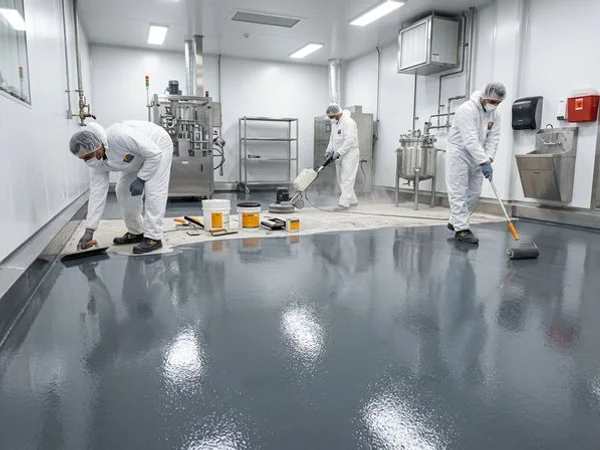
Pharmaceutical Cleanroom Epoxy Flooring in Mississauga, Ontario
Pharmaceutical cleanroom epoxy in Mississauga for ISO 5-8 classified spaces, with novolac chemical-resistant base coats, ESD-dissipative topcoats, and zero-particle chemistry for GMP manufacturing and compounding pharmacies. $12-$20 per sq ft installed, with phased off-hours scheduling that protects classification. WSIB cleared, $2M liability, full GMP documentation.
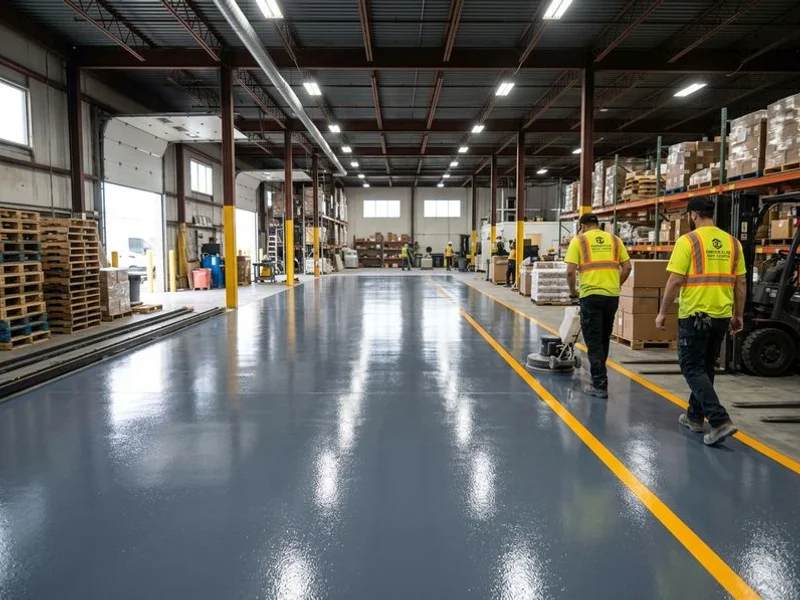
Commercial Epoxy Flooring in Mississauga, Ontario
Commercial epoxy flooring in Mississauga for retail, restaurants, offices, healthcare, labs, and institutional buildings. CFIA-compliant kitchen systems, coved medical floors, ESD flooring, and high-traffic retail epoxy. From $3 per sq ft for warehouse epoxy to $20 for pharmaceutical cleanrooms. WSIB cleared, $2M liability, compliance documentation on every project.
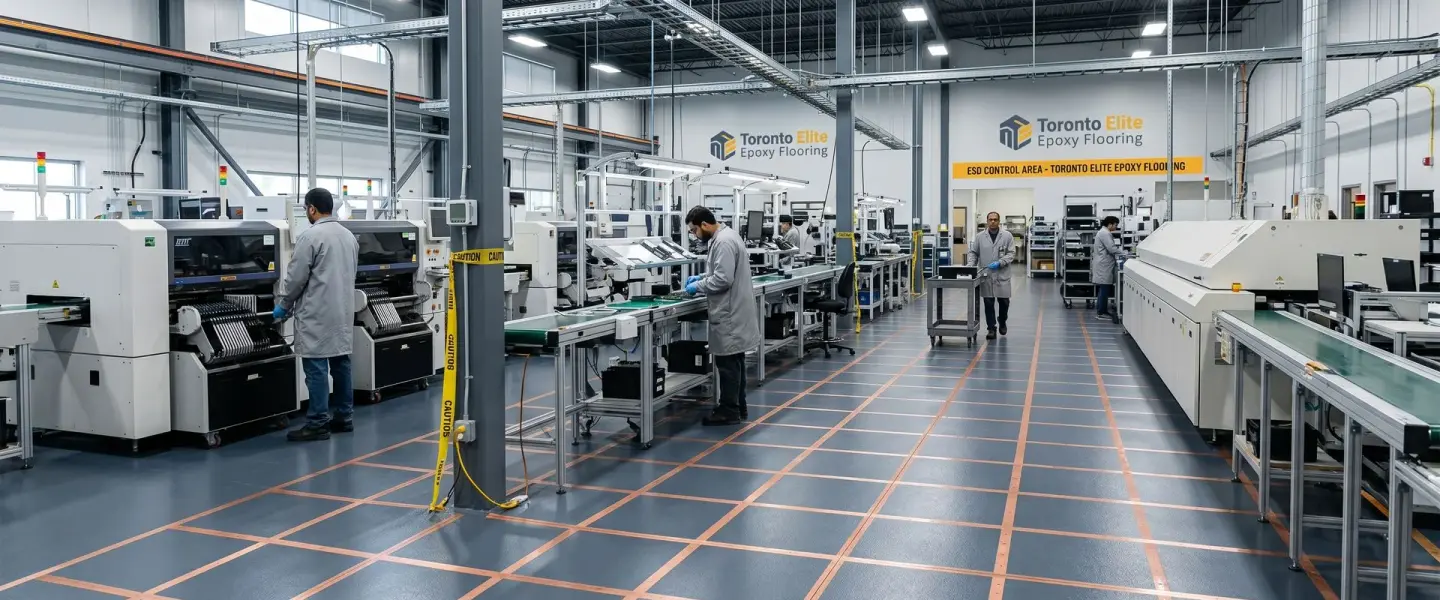
ESD Conductive Epoxy Flooring in Mississauga, ON
ESD conductive epoxy in Mississauga, built to ANSI/ESD S20.20 with a copper grounding grid and verified by megohmmeter to NFPA 99 and ESD Association STM7.1. $7-$14 per sq ft installed for standard systems, with resistance testing and a full compliance report included. Built for electronics, aerospace, data centres, and cleanrooms.
Secondary Containment Coatings in Mississauga, Ontario
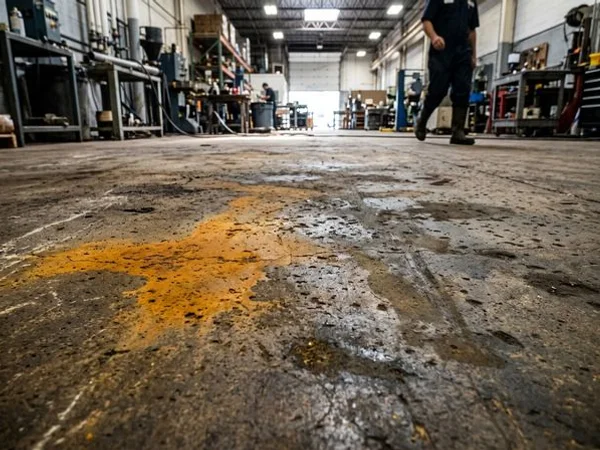
Secondary containment coatings in Mississauga for fuel tank berms, chemical storage, transformer pads, and spill containment floors. Novolac and vinyl ester systems rated for full chemical and petroleum immersion, built to TSSA requirements. $10-$18 per sq ft installed. WSIB cleared, $2M liability, full compliance documentation.
Institutional & Medical Epoxy Flooring in Mississauga, ON
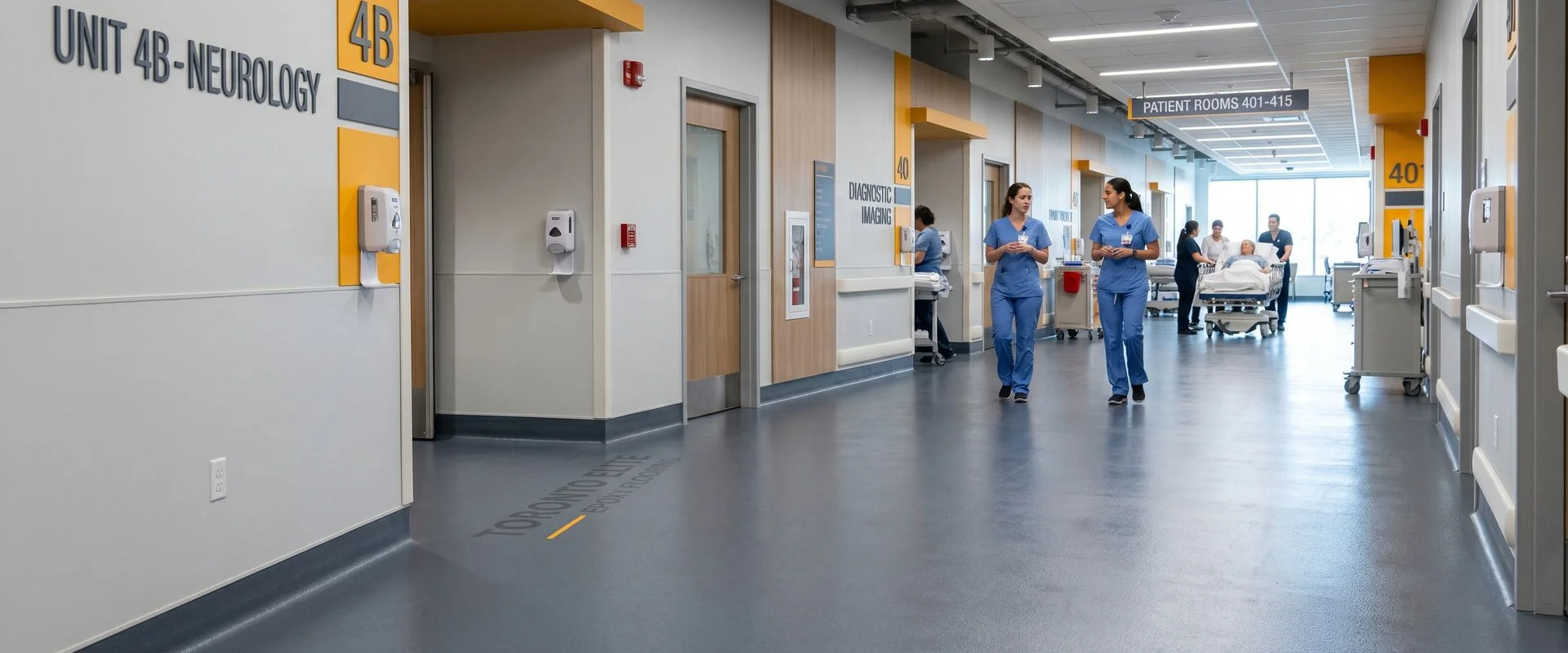
Institutional and medical epoxy flooring in Mississauga: seamless antimicrobial systems with 4-6 inch coving and zero-VOC chemistry for hospitals, clinics, schools, and long-term care. $6-$12 per sq ft installed for standard systems, with section-by-section scheduling so the facility stays open. WSIB cleared, $2M liability, IPAC Canada documentation.
Ready to Book Laboratory Epoxy?
Same-day free on-site assessment. WSIB-certified, $2M liability on every project.